
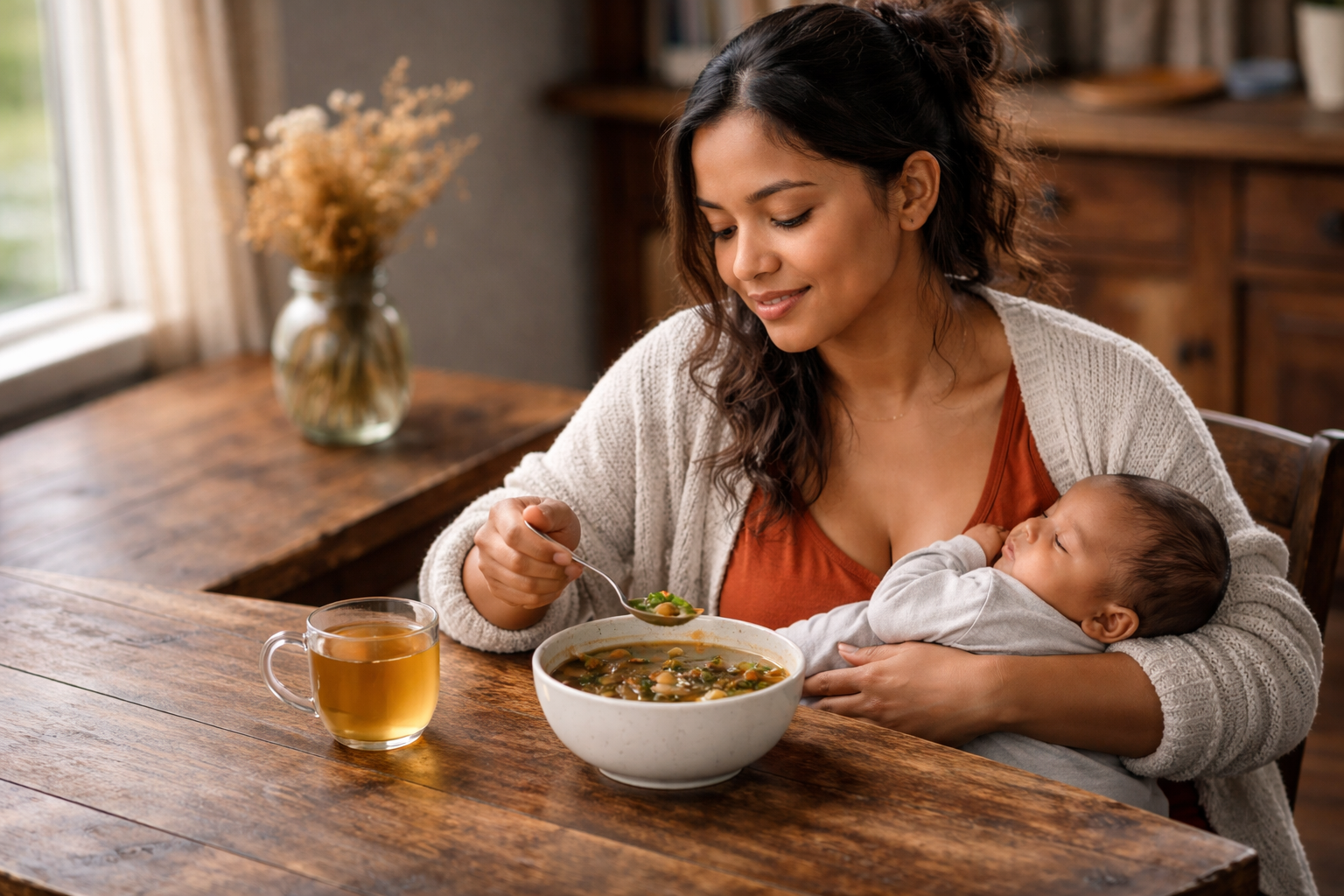
Figuring out what to eat after having a baby is an essential part of postpartum recovery and getting your energy back as a new mom. Recovery after birth is often overlooked, but nourishment has always been one of the most important ways mothers have been supported throughout history.
Across cultures, there are long-standing traditions around postpartum foods, and they tend to have something in common: they are simple, warm, and easy for the body to receive during a time when everything feels depleted.
I’ve personally found some of the most supportive options to be water-based and gentle, like soups, stewed or steamed fruits and vegetables, and slow-cooked meals like chilis. Yogurt, teas, and even something like lactation cookies can also feel grounding and helpful, especially if you’re nursing. I also kept simple electrolyte packets and a large insulated water bottle nearby constantly because hydration made a much bigger difference in my recovery and energy than I expected.
If you’re in the very early postpartum window, I share a more specific breakdown in What to Eat in the First 3 Days After Giving Birth, where I focus on the most gentle, easy-to-digest foods for immediate recovery.
Why So Many Mothers Feel Depleted After Birth
Even when everything goes “well,” birth is still a major physical event. Your body has just gone through pregnancy, labor, and in many cases blood loss, hormonal shifts, and interrupted sleep within days of giving birth.
On top of that, there is constant output:
- feeding a baby
- holding and carrying
- waking throughout the night
- adjusting emotionally and mentally
It’s not surprising that many mothers feel depleted. The problem is that most of the advice we hear postpartum focuses on the baby, while the mother is expected to function on very little support.
Nutrition becomes one of the most accessible ways to start restoring what’s been used.
Postpartum Nutrition Is About Rebuilding, Not Restricting
After having a baby, your body is not in a place to optimize — it’s in a place to recover.
This isn’t the time for:
- cutting calories
- trying to “eat clean” in a restrictive way
- avoiding entire food groups
It’s a time to ask a different question:
What does my body need more of right now?
Postpartum nutrition is less about perfection and more about consistently adding back nutrients, energy, and stability.
What Your Body Actually Needs After Birth
You don’t need a complicated plan. Most of the time, support comes from a few key things done consistently.
Protein (for repair and recovery)
Protein supports tissue healing, hormone production, and helps stabilize blood sugar.
Simple options:
- eggs
- yogurt or cottage cheese
- slow-cooked meats
- beans or lentils
- wild-caught salmon (when available)
On especially exhausting days, I found it helpful to keep simple protein options nearby like grass-fed meat sticks, pre-made broths, and slow cookers meals that could last several days without much effort. Having a good slow-cooker or dutch oven on hand is so helpful in this season of life.
If it’s accessible, choosing organic or sustainably raised options can improve quality, but it doesn’t need to be perfect to be supportive.
Minerals (especially iron, magnesium, sodium)
Birth can deplete iron, and ongoing stress can impact magnesium levels.
You can support this with:
- broths and meat stock
- leafy greens
- whole foods with natural salt
- simple, nourishing meals
- molasses (added to yogurt, tea, or baked into lactation cookies)
I also personally found electrolyte packets and magnesium supplements helpful during postpartum recovery, especially during periods of exhaustion, breastfeeding, and disrupted sleep.
One simple thing that can make a real difference with iron is pairing it with vitamin C. This helps your body absorb iron more effectively, especially from plant-based sources.
Easy ways to do this:
- adding citrus (like lemon or orange) alongside meals
- berries with yogurt or oatmeal
- bell peppers or tomatoes with meals
- a squeeze of lemon into soups or broths
It doesn’t have to be complicated, even small pairings like this can help your body actually use the nutrients you’re taking in.
Healthy Fats (for brain and mood support)
Fats are essential for hormone balance and overall energy.
Examples:
- butter
- olive oil
- full-fat dairy
- avocado
Simple additions like good olive oil, full-fat yogurt, nut butters, or avocado toast can make meals feel much more satisfying during postpartum recovery when your energy needs are high.
Easy-to-Digest Carbohydrates (for energy)
Carbohydrates are often underestimated, but they are one of the quickest ways to support energy and the nervous system.
Think:
- fruit
- toast or rice (I prefer sourdough when it’s freshly made and minimally processed)
- potatoes
- oatmeal
Fluids (beyond just water)
Hydration is critical, especially if you are breastfeeding.
Helpful options:
- water
- herbal teas (fennel, fenugreek, or mother’s milk blends)
- broths
- electrolyte-rich drinks (lower sugar options or simple choices like coconut water)
One of the things I noticed postpartum is how quickly nourishment becomes connected to both mother and baby. As your baby gets older and starts solids, feeding can feel like a whole new transition. If you’re in that season too, I share a gentle, realistic approach in my post What to Feed a Baby 6–12 Months: Sample Meal Plan + Daily Schedule, including simple meal ideas and balanced foods for early feeding.
The Foods I Reached for Most
Postpartum is not the time to overcomplicate meals. The foods that tend to work best are the ones that are easy to prepare, easy to eat, and actually appealing when your appetite is low.
Some of the most reliable options for me were:
- soups and meat stock
- eggs and toast
- yogurt with fruit and honey
- simple rice or potatoes with butter
- warm, slow-cooked meals
I also relied heavily on leftovers stored in simple glass food containers because reheating nourishing food quickly was often the difference between actually eating and accidentally skipping meals altogether.
There were days where I ate the same few foods on repeat, and that was enough. Consistency mattered more than variety.
Great Handheld Foods While Nursing or Feeding Your Baby
One of the things I didn’t fully realize until I was in it is how often you’re eating with one hand postpartum. Whether you’re nursing, bottle feeding, or just holding a baby who doesn’t want to be put down, meals don’t always happen the way you expect them to.
Having simple, handheld foods and drinks available can make a big difference in keeping your energy steady throughout the day.
Some of the easiest options I’ve reached for are:
- meat sticks (like grass-fed beef or turkey) for quick protein
- Mama Chia pouches for something hydrating and easy to get down
- bananas or other soft fruits
- toast with butter or nut butter
- cheese sticks or small yogurt drinks
- lactation tea (mother’s milk)
- lactation cookies
I also found it surprisingly helpful to keep a small postpartum snack basket or nursing cart nearby stocked with easy foods, tea bags, electrolyte packets, snacks, burp cloths, and water so I didn’t have to constantly get up during long feeding sessions.
These aren’t meant to replace full meals, but they help fill in the gaps when sitting down to eat isn’t realistic. Sometimes just having something within reach can prevent that late afternoon crash when you realize you haven’t eaten in hours.
I found it helpful to keep a small basket or tray near where I usually fed the baby so I didn’t have to think about it. When everything feels a little chaotic, having food already there makes it easier to take care of yourself without adding another task.
What to Avoid (Or Be Mindful Of) Postpartum
This isn’t about strict rules, but there are a few things that can make recovery harder if they’re overdone.
- restrictive dieting (can slow recovery and increase fatigue)
- skipping meals (leads to energy crashes and irritability)
- relying heavily on highly processed, low-nutrient foods
- excess caffeine (can increase anxiety and disrupt sleep further)
- taking too many supplements at once without guidance
Again, the goal isn’t perfection — it’s finding foods that support you during this vulnerable time.
A Simple Way to Think About Postpartum Eating
Instead of asking: “Is this healthy enough?”
Try asking: “Is this helping me feel more stable?”
Stability can look like:
- more consistent energy
- fewer crashes
- feeling a little more grounded
Small, consistent choices tend to matter more than perfect ones.
What to Focus on When Eating Feels Overwhelming
In the early postpartum period, even thinking about what to eat can feel like too much. You’re recovering, adjusting, likely sleeping in broken stretches, and often putting your baby’s needs ahead of your own without even realizing it.
This is where I’ve found it most helpful to shift the goal away from doing everything “right,” and instead focus on a few simple anchors that support your body without adding pressure.
Prioritize warmth and simplicity
Warm, easy-to-digest foods tend to be the most supportive in the early weeks. Things like soups, stews, broths, oatmeal, soft eggs, and rice-based meals are gentle on the body and require less energy to process. Across cultures, postpartum meals are almost always warm and nourishing for a reason — your body is rebuilding.
Think in terms of support, not perfection
Instead of trying to hit every nutritional target, it can be more helpful to ask: “What would feel supportive right now?”
Sometimes that looks like a balanced meal. Other times it’s eating something quick while holding your baby. Both count. Consistency over time matters more than any single meal.
Keep a few reliable options on hand
Having a short list of foods you can rely on makes a big difference when decision fatigue is high. This might be yogurt with fruit, toast with eggs, a simple soup, or leftovers you can reheat quickly. You don’t need endless variety — just a few things that feel easy and nourishing.
Hydration is part of nourishment
Especially if you’re breastfeeding, your fluid needs increase. Keeping water, tea, or electrolyte drinks nearby can help you stay hydrated without having to think about it. Even small, steady sips throughout the day make a difference.
Why This Matters More Than We Think
Postpartum nutrition isn’t just about physical recovery. It’s also one of the most overlooked pieces of emotional stability in early motherhood.
When your body is undernourished, everything feels harder — your patience, your energy, your ability to regulate stress. And yet, this is often the exact time when mothers are expected to function at their highest capacity.
It’s easy to fall into the pattern of taking care of everyone else first, and then realizing at the end of the day you barely ate anything yourself.
The Link Between Nourishment and Burnout
Over time, this pattern doesn’t just affect your physical health — it can contribute to a deeper sense of depletion that many mothers carry without fully naming.
Skipping meals, eating in a rush, or constantly putting your needs last can slowly reinforce the feeling that you are not a priority in your own life. And that’s often where burnout begins.
Not because you’re doing something wrong, but because the structure around modern motherhood makes it incredibly easy to become depleted.
If you’ve ever felt like you’re constantly behind, not doing enough, or wondering why everything feels harder than it should, you’re not alone in that.
In my next article, Mom Guilt and Burnout: How I Stopped Trying to Optimize Everything, I address why so many mothers feel like they’re failing when they’re actually operating in an unsustainable system.
Still looking for more support?
Or, if you’re looking for something more comprehensive, explore The First 7 Days: Postpartum Nourishment Guide—a 40-page resource featuring Ayurvedic-inspired nourishing recipes, shopping lists, freezer preparation guidance, postpartum tea recommendations, support person planning tools, and practical fourth-trimester preparation.
Frequently Asked Questions
How many calories should I eat postpartum?
There isn’t one exact number that works for everyone. Most mothers need more food than they expect, especially if breastfeeding. Hunger is often a helpful guide.
What are the best foods for breastfeeding?
There isn’t a single perfect list, but foods that support overall nourishment tend to help:
- protein-rich foods
- healthy fats
- carbohydrates for energy
- plenty of fluids
Many mothers also find foods like oats, soups, and lactation cookies helpful.
Is it normal to have low appetite after birth?
Yes. Hormonal shifts, exhaustion, and physical recovery can all affect appetite. This is why simple, easy-to-eat foods are often the most supportive.
Do I need supplements postpartum?
Some mothers benefit from supplements like iron supplements, magnesium, omega-3s, or postpartum multivitamins, but it depends on individual needs. It’s always best to check with a healthcare provider before starting anything new.
When can I start focusing on weight loss?
Recovery comes first. For many mothers, focusing on nourishment and stabilization leads to more sustainable results over time than trying to lose weight immediately.
The Beautiful Baby may earn a small commission from affiliate links at no extra cost to you. Products are recommended based on personal experience and careful research.
Sources + Research
- https://www.cdc.gov/breastfeeding-special-circumstances/hcp/diet-micronutrients/maternal-diet.html
- https://www.cdc.gov/breastfeeding-special-circumstances/hcp/diet-micronutrients/index.html
- https://www.nationalacademies.org/publications/1577
- https://pmc.ncbi.nlm.nih.gov/articles/PMC5104202/
- https://www.acog.org/clinical/clinical-guidance/committee-opinion/articles/2018/05/optimizing-postpartum-care



0 Comments