
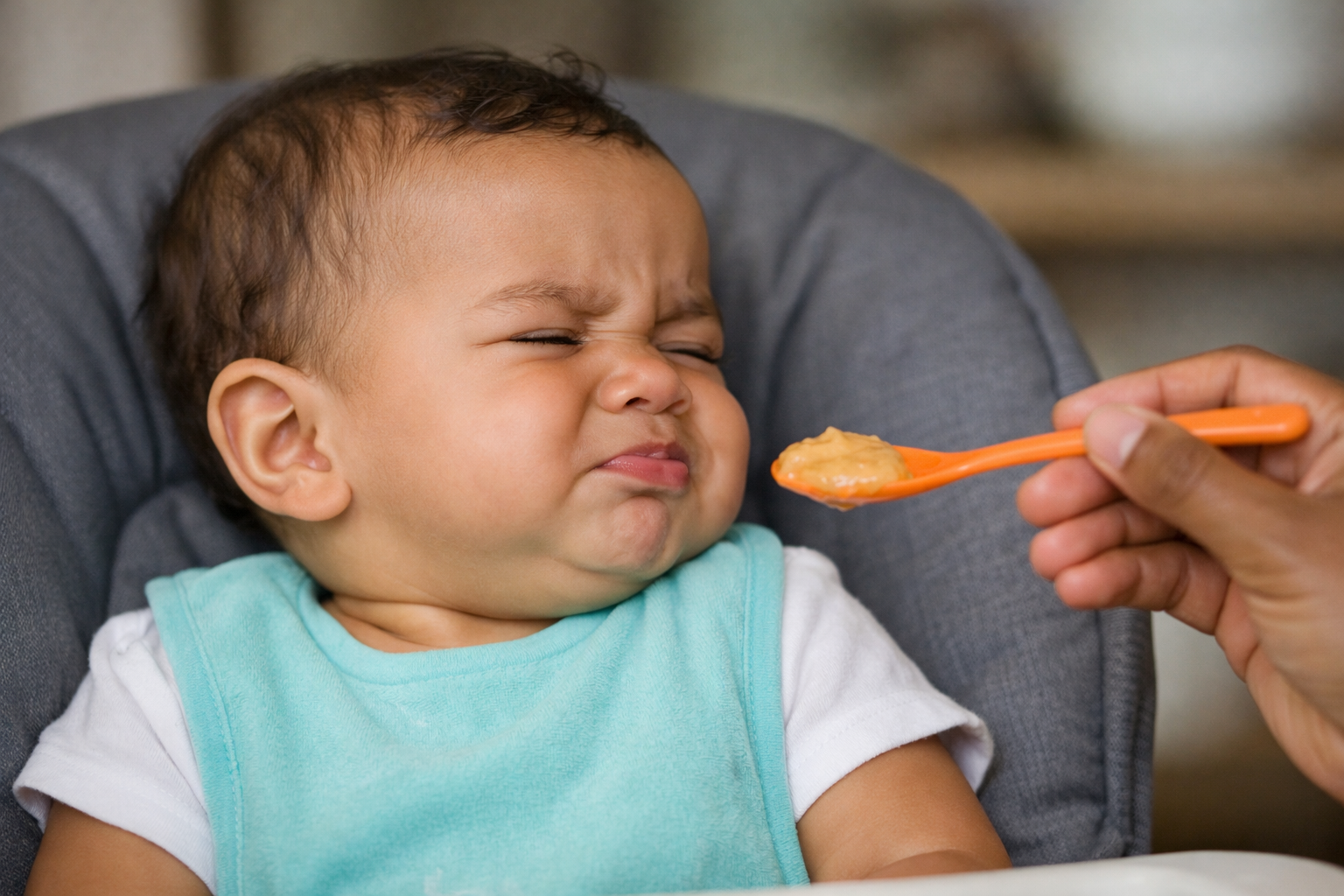
If you’re wondering what to feed a baby who won’t eat, you’re not alone. Many babies go through phases where they suddenly refuse food, eat much less than usual, or turn away from meals entirely. In most cases, a baby who won’t eat is experiencing a normal and temporary change in appetite caused by illness, teething, developmental shifts, or growth patterns. Over time, I’ve learned that the most helpful approach is to stay calm, offer simple nourishing foods, and focus on hydration and gentle meals until appetite returns.
When a baby suddenly refuses food, it can feel alarming. I’ve had moments where a full meal is prepared, the highchair is ready, and my baby simply turns away. As parents, it’s easy to worry that something is wrong or that our babies aren’t getting enough nutrition.
The truth is that temporary drops in appetite are very common in babies and toddlers. Their bodies are growing rapidly, and appetite naturally shifts from day to day. I’ve learned that it helps to focus on patterns across days and weeks rather than worrying about a single meal or even a single day.
In most cases, a baby refusing food is temporary and resolves on its own.
Common Reasons Babies Refuse Food
There are several normal reasons babies may temporarily refuse food.
Illness
Colds and minor viral illnesses often reduce appetite. Congestion, fatigue, inflammation, and mild fever can make eating less appealing.
When my babies are sick, I focus less on full meals and more on hydration and gentle foods. I talk more about this approach in my article What to Feed a Baby With a Cold (By Age + Appetite Level), where I share how I adjust meals depending on how a baby is feeling.
A simple non-toxic humidifier for baby’s room or saline spray and nasal aspirator can also help make babies more comfortable during illness, which sometimes improves appetite indirectly.
Developmental Changes
Babies grow very rapidly during their first year, but growth happens in waves. During slower growth periods, appetite often drops.
Teething
Teething can cause gum discomfort that temporarily reduces interest in eating.
Cold foods sometimes help during this stage. My babies have often preferred soft chilled foods served in silicone baby feeding bowls and spoons or through a silicone fruit feeder pacifier during teething phases.
Too Much Pressure Around Food
Babies are very sensitive to pressure. If they feel pushed to eat, they often resist even more.
I try to keep mealtimes calm and low pressure so food remains something positive rather than stressful. And I’d be lying if I said I haven’t struggled with this myself. I tend to be very nutrition-focused, so it has taken a lot of internal work for me to learn to let go a little around food and trust that my babies know what feels right for their bodies, as long as I’m offering healthy options.
If you’re like me and sometimes struggle with mom guilt or burnout around trying to do everything perfectly, you might relate to my article Mom Guilt and Burnout: How I Stopped Trying to Optimize Everything.
Why Babies Sometimes Love a Food One Day and Refuse It the Next
One thing I’ve noticed with my own babies is how quickly their preferences can change. A food they happily ate yesterday might be refused today, and something they ignored last week may suddenly become a favorite.
At first this can feel confusing, but over time I’ve come to see it as a normal part of how babies interact with food. Babies are often very sensitive to smell, texture, temperature, and color, and even small differences in how a food looks or feels can influence whether they accept it in that moment.
In early childhood, appetite tends to be closely connected to how the body feels day to day. Babies are still developing their long-term eating habits, and their responses to food are often guided by immediate sensory experiences and internal hunger cues. Some days they may naturally eat more of certain foods, while other days they may seem uninterested.
This is one of the reasons I try to focus less on “perfect” eating and more on offering a variety of nourishing foods consistently over time. In my article What to Feed a Baby (6–12 Months): Sample Meal Plan + Daily Schedule, I share some of the simple meals and balanced foods I regularly offer during this stage, even when appetite and preferences fluctuate from day to day.
Remembering this has helped me take some of the pressure out of feeding. If a food is refused one day, I simply offer it again another time without forcing it. Quite often, a food that was rejected yesterday is happily accepted the next day.
Over time, this gentle repetition helps babies build familiarity with a wide range of foods while allowing them to stay connected to their natural appetite cues.
My Approach When My Baby Won’t Eat
When my baby refuses food, I focus on a few simple priorities:
- Keep offering food without pressure
- Prioritize hydration
- Choose simple, familiar foods
- Trust appetite to return naturally
Instead of trying to force a full meal, I offer small portions and allow my baby to decide how much to eat.
Babies are surprisingly good at self-regulating intake over time.
Using a sectioned suction plate or adjustable highchair footrest has also helped make mealtimes feel calmer and more comfortable in our home.
Gentle Foods Babies Often Accept
When appetite is low, softer and simpler foods are often easier for babies to accept.
Some foods that have worked well in my home include:
- mashed banana
- yogurt (if tolerated)
- applesauce
- oatmeal
- scrambled eggs
- avocado
- soft cooked vegetables
- shredded chicken
- simple soups or broths
- rice and beans (separate or together)
- ground meat (with light seasoning)
- cheese (if tolerated)
Sometimes I serve foods plain, and sometimes I combine them into simple bowls or soft meals depending on what my baby seems interested in that day.
A good glass food storage container set or small stainless steel toddler utensils can also make preparing and storing simple meals easier.
Nourishing Broths and Simple Soups
One of my favorite foods to offer when appetite is low is homemade meat stock. It’s gentle, hydrating, and easy for babies to tolerate when they don’t feel like eating much.
I explain the difference and why I prefer it in my article Chicken Meat Stock for Sick Babies (Why I skip Bone Broth), where I share how I prepare it and why I often reach for it during illness.
Warm broths can provide hydration and nutrients while being very easy for babies to consume.
A slow cooker or large Dutch oven can make preparing homemade meat stock much easier and more realistic for busy parents.
When Appetite Changes as Babies Grow
As babies grow into toddlers, appetite patterns become even more unpredictable. Some days toddlers eat large amounts, and other days they seem to live on very small portions.
When illness is involved, I focus on simple foods and hydration rather than trying to maintain a perfect diet. I go into more detail about this in What to Feed Toddlers During Sick Season (Yes, Dairy Is Okay), where I share the foods I rely on most when my toddlers are under the weather.
Some parents also find that a gentle infant’s probiotic supplement can be supportive during and after illness, especially when appetite and digestion feel off. Here is another probiotic option for toddlers.
When Appetite Is Very Low
If my baby eats very little for a day or two, I try to remember that short periods of low appetite are usually normal.
In these situations, I prioritize:
- breast milk or formula for younger babies
- fluids and hydration
- small snacks instead of full meals
- foods that are easy to swallow
Often appetite returns naturally once the underlying reason passes.
A simple straw cup for toddlers or spill-proof training cup can sometimes encourage more fluids during these phases.
Signs It May Be Time to Contact a Pediatrician
While appetite fluctuations are common, it’s important to monitor for signs that may require medical attention.
Consider contacting a pediatrician if your baby has:
- signs of dehydration
- persistent vomiting
- difficulty swallowing
- lethargy or unusual sleepiness
- refusal of fluids
- symptoms lasting several days without improvement
Parents know their babies best, so it’s always reasonable to seek guidance if something feels concerning.
Frequently Asked Questions
Is it normal for babies to refuse food sometimes?
Yes. Temporary appetite changes are very common in babies and toddlers. Growth patterns, illness, teething, and developmental changes can all affect appetite.
Should I force my baby to eat?
Generally, it’s better to avoid forcing food. Pressure around eating can make babies more resistant. Offering food calmly and allowing them to decide how much to eat often leads to better long-term eating habits.
What if my baby refuses solids but still drinks milk?
For younger babies, breast milk or formula remains the primary source of nutrition during the first year. If milk intake is still normal, short periods of low solid food intake are usually not concerning.
How long can babies go without eating much?
Many babies eat less for one to three days during illness or developmental changes. As long as hydration remains adequate and the baby is otherwise acting normally, appetite usually returns.
The Beautiful Baby may earn a small commission from affiliate links at no extra cost to you. Products are recommended based on personal experience and careful research.
Sources + Research
- https://www.cdc.gov/infant-toddler-nutrition/index.html
- https://www.nhs.uk/conditions/baby/weaning-and-feeding/babys-first-solid-foods/
- https://www.stanfordchildrens.org/en/topic/default?id=feeding-guide-for-the-first-year-90-P02209
- https://pmc.ncbi.nlm.nih.gov/articles/PMC11562447/
- https://pmc.ncbi.nlm.nih.gov/articles/PMC6598438/
- https://pmc.ncbi.nlm.nih.gov/articles/PMC12342993/




0 Comments