
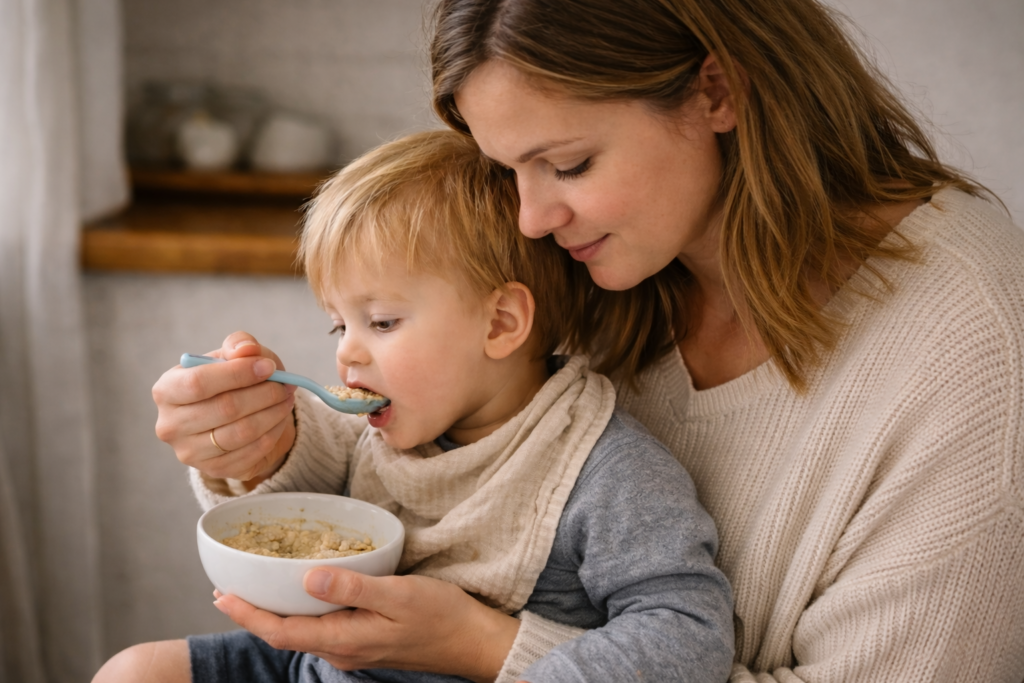
When thinking about what to feed toddlers during sick season, the focus shifts from perfect nutrition to hydration, gentle calories, and foods they will actually accept. Appetite often drops during colds and seasonal viruses, which is normal and temporary. Instead of pushing full meals, I prioritize simple, easy-to-digest foods that support recovery without overwhelming a tired, congested toddler. During this time, fluids and easy calories matter more than volume or variety.
My Goals When Feeding a Sick Toddler
When my toddler is sick, I focus on:
- Keeping fluids steady
- Offering simple, familiar foods
- Choosing nutrient-dense options when possible
- Not forcing meals
- Supporting recovery without adding stress
If appetite is very low, hydration comes first.
For age-specific guidance and appetite-based adjustments, I go deeper in my post What to Feed a Baby With a Cold (By Age + Appetite Level). And when I want something deeply nourishing but easy to tolerate, I rely on homemade meat stock, which I explain in detail in my Chicken Meat Stock During Sick Season (Why I Skip Bone Broth) article. Warm, mineral-rich stock is often the one thing my toddlers will sip even when nothing else sounds good.
Gentle Foods I Offer During Sick Season
Warm Broths and Meat Stock
Warm broth is soothing, hydrating, and easy to digest. Meat stock provides sodium, trace minerals, collagen, and gentle protein without requiring much appetite. Sometimes I serve it plain. Sometimes with soft carrots or shredded chicken.
Simple Carbohydrates
When energy is low, carbohydrates are often easiest.
- White rice
- Oatmeal
- Soft toast with butter
- Sweet potatoes
- Applesauce
These provide calories without overwhelming the stomach.
Easy Proteins
- Scrambled eggs
- Shredded chicken
- Cottage cheese
- Plain yogurt
Protein supports immune function, but I don’t push it if appetite is low. Small amounts are enough.
Fruit
- Bananas
- Stewed apples
- Berries
- Smoothies
Fruit provides hydration and vitamin C in a form most toddlers readily accept. Smoothies can be enriched with milk for added calories and a small handful of spinach if it’s already familiar.
Dairy During Sick Season: What the Research Actually Says
There’s a persistent belief that dairy worsens congestion or increases mucus. Research does not support this.
The Mayo Clinic states that milk does not cause the body to produce more mucus during a cold. While milk can leave a temporary coating sensation in the mouth, studies show no significant increase in congestion or nasal secretions after dairy consumption.
If a toddler tolerates dairy normally, there is no medical reason to remove it during a cold.
Why I Often Keep Dairy In
Due to the coating sensation regular milk can leave in the mouth, I usually offer it less often and instead serve plain yogurt and cottage cheese. These are two of the easiest foods my toddlers will eat when they’re sick. They provide:
- Protein
- Calcium
- B vitamins
- Calories when appetite is low
Yogurt and cottage cheese with live cultures also contain probiotics. Some research suggests probiotics may reduce the risk or duration of certain respiratory and gastrointestinal infections and help support gut health, especially after antibiotic use.
Yogurt can also be easier to digest than milk because live cultures help break down lactose.
When to Avoid Dairy
If a child has a diagnosed milk allergy, dairy should be avoided. If they are lactose intolerant, yogurt and aged cheeses are often better tolerated than milk, but this varies by child. Always check with your pediatrician about what is appropriate for your child, especially regarding allergies and intolerances.
Otherwise, dairy does not need to be restricted during routine respiratory illness.
Supporting the Immune System Through Food
Food provides building blocks for recovery.
During sick season, I focus on:
- Hydration
- Adequate calories
- Protein in small amounts
- Vitamin C from fruits
- Zinc-containing foods like meat and eggs
- Probiotic foods if tolerated
And just as importantly, I reduce pressure. Stress around food can prolong mealtime battles during an already difficult week.
Appetite Over Perfection
When my toddler is sick, I care less about perfect nutrition and more about steady support. Some days that means broth and toast. Other days that means yogurt and fruit. Recovery eating is different from thriving eating, and that’s okay.
Once they feel better, appetite returns naturally.
Frequently Asked Questions
Should I force my toddler to eat when sick?
No. Appetite suppression during illness is normal. Offer small portions frequently and prioritize fluids.
Does dairy increase mucus?
Research does not show that dairy increases mucus production during colds in children or adults.
Is yogurt good during a cold?
If tolerated, plain yogurt provides protein and may support gut health due to live cultures.
What if my toddler only wants milk?
If they tolerate dairy and are otherwise healthy, milk can provide calories and hydration. Balance it with other fluids if possible.
When should I call the pediatrician?
Call if there are signs of dehydration (dry mouth, no tears, decreased urination), persistent high fever, breathing difficulty, or symptoms that worsen instead of improve.
Sources + Research
- https://www.mayoclinic.org/diseases-conditions/common-cold/expert-answers/phlegm/faq-20058015
- https://dairynutrition.ca/en/nutrition-and-health/mucus/milk-consumption-and-mucus-production-what-science-says
- https://www.ncbi.nlm.nih.gov/pmc/articles/PMC4298112
- https://mcpress.mayoclinic.org/dairy-health/how-yogurt-supports-healthy-digestion




0 Comments