
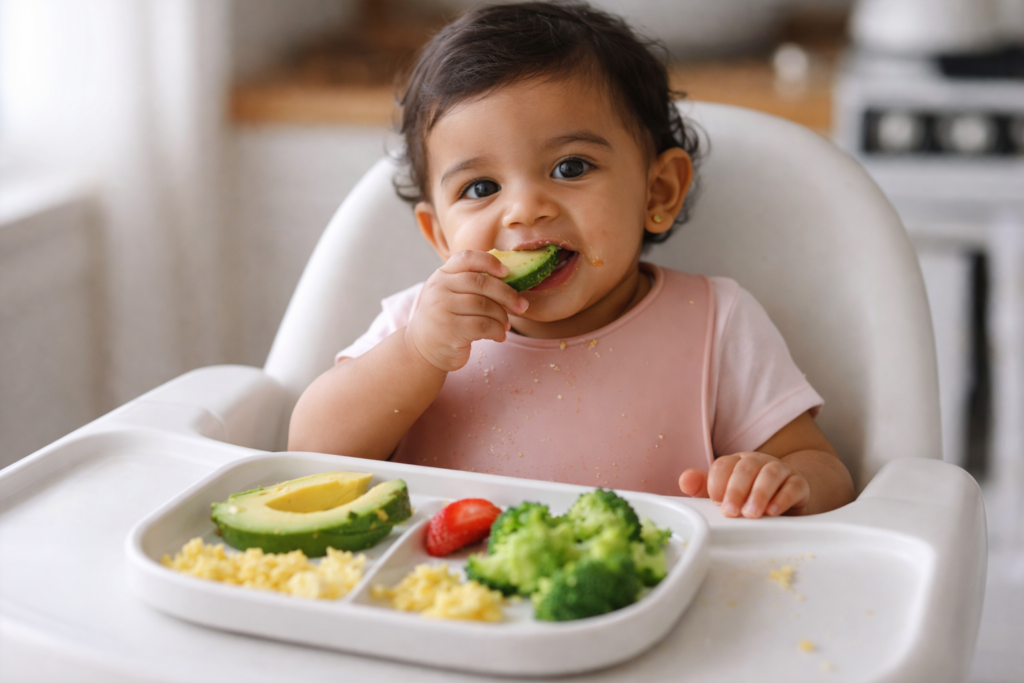
One of the most common questions when starting solids is what to feed a baby 6-12 months and what that looks like over the course of a day.
It’s easy to get overwhelmed with conflicting advice, sample schedules, and pressure to do everything “right.” Over time, I’ve found that feeding a baby can be much simpler when you focus on a few core principles instead of trying to perfect every meal.
When introducing new foods, it’s also important to go at a steady, intentional pace. Offering one new food at a time and watching for any reactions can help you identify sensitivities early, especially when it comes to common allergens like eggs, dairy, peanuts, and wheat. Many current guidelines support introducing allergenic foods earlier rather than delaying them, but every child is different, and it’s always a good idea to check in with your pediatrician if you have concerns or a family history of allergies.
This guide will walk you through what a balanced day of eating can look like for babies 6–12 months, along with the reasoning behind certain first foods and how to approach feeding in a more grounded way.
What to Feed a Baby (6–12 Months): A Simple Daily Rhythm
At this stage, breastmilk or formula is still the primary source of nutrition. Solid foods are a gradual addition, meant to build exposure, skills, and nutrient intake over time. A typical 6-12 month old baby needs around 3-6 milk feedings a day.
Morning
Breakfast (1–2 hours after first milk feeding):
• eggs with butter or avocado
• oatmeal with nut butter and soft fruit
• yogurt with mashed berries
I found that having a few simple feeding staples made this stage much easier, especially things like silicone suction plates, soft-tip baby spoons, and glass baby food storage jars for leftovers and prepped meals.
Midday
Lunch:
• shredded chicken with soft vegetables
• lentils with olive oil
• rice with mashed vegetables and butter
This is also a stage where having a reliable high chair with an easy-clean tray and a good silicone bib with a catch pocket can make daily meals far less stressful.
Afternoon
Optional snack (depending on age):
• soft fruit
• yogurt
• leftover vegetables
Simple snacks are often easiest when babies can self-feed safely. I especially liked using a snack cup with handles and small stainless steel baby forks and spoons once my children became more interested in feeding themselves.
Evening
Dinner:
• salmon with sweet potato
• ground meat with zucchini
• pasta with olive oil and soft vegetables
For dinners, I often relied on simple kitchen basics like a cast iron skillet, glass baking dish, and stainless steel divided baby plates to make cooking and serving easier without using plastic or toxic cookingware.
Before bed, you can add a final milk feeding.
What “Balanced” Means for Babies
Balanced doesn’t mean every meal has to be perfect. Think about it as offering a variety of nutrients over time.
Include:
• healthy fats (butter, olive oil, avocado)
• protein (meat, eggs, yogurt, legumes)
• carbohydrates (rice, oats, fruit, vegetables)
Meals will naturally vary. Some will be fuller, while other times your baby may eat just a few bites. Appetite can also shift day to day, with some days higher and others lower.
If your baby goes through phases of eating very little, that can also be part of this process. I share more about how to approach that here: What to Feed a Baby Who Won’t Eat.
Why Gut Health Matters in Early Feeding
One of the things that shifted my perspective on feeding was understanding how much early foods support the developing gut.
A baby’s digestive system is still maturing, and the foods we introduce can either support that process or make it more difficult.
Warm, simple, easy-to-digest foods tend to be the most supportive, especially in the beginning.
In many traditional cultures, early foods often include broths, soft cooked meals, and nutrient-dense animal foods for this reason.
Interestingly, many of these same nourishing, easy-to-digest foods are also deeply supportive during postpartum recovery. I share more about that here: What to Eat After Having a Baby (Postpartum Nutrition for Recovery + Energy).
Some parents also choose to support gut health with a baby probiotic supplement, especially after antibiotics, digestive upset, or during periods of transitioning foods. As always, it’s a good idea to talk with your pediatrician about what feels appropriate for your child.
A simple slow cooker or Dutch oven can make homemade meat stock much easier to prepare regularly without a lot of extra effort.
Why Protein Is an Important First Food
Protein is often overlooked in early feeding, but it plays an important role in growth, blood sugar stability, and overall development.
Many first food lists lean heavily toward fruits and grains, but incorporating protein early can help create more balanced meals.
Simple ways to include protein:
• soft scrambled eggs
• shredded meat (chicken, beef, lamb)
• full-fat yogurt
• lentils or beans (well cooked)
These foods are not only nutrient-dense, but they also help babies stay more satisfied.
I also found that having a few practical feeding tools nearby, like long-sleeve waterproof bibs and an easy-clean splat mat, made it easier to relax and let babies explore food more naturally.
Letting Babies Explore Meat (Yes, Even Drumsticks and Steak)
Another approach that can feel surprising at first is offering babies larger pieces of meat, like a chicken drumstick or a strip of steak, to gnaw on.
While it may seem counterintuitive, babies don’t need to fully chew and swallow meat to benefit from it. They are often able to suck on the juices, which contain valuable nutrients like iron, zinc, and protein.
This approach can be a simple way to introduce animal foods in a form that aligns with their developmental stage
How to offer it safely:
• choose a large piece they can hold (not small or bite-sized)
• ensure meat is tender and cooked through
• remove loose skin, small bones, or sharp edges
• always supervise closely while eating
Babies will naturally gnaw, suck, and explore at their own pace. This is part of how they learn to eat, not just what to eat.
Like anything in feeding, you can take what feels supportive and leave what doesn’t. There isn’t one single right way — just options that may work for you and your baby.
A sturdy wooden high chair footrest attachment can also help support safer positioning and stability during meals.
Nutrient-Dense First Foods: Bone Marrow & Meat Stock
The most nourishing first foods are often the simplest.
Bone marrow and meat stock are rich in minerals, collagen, and easily absorbable nutrients that support gut health and overall development.
Meat stock, in particular, is gentle on digestion and can be offered on its own or mixed into foods like rice or vegetables.
If you’re curious about why I focus on meat stock over bone broth for babies, I share more here: Chicken Meat Stock for Sick Babies (Why I Skip Bone Broth).
I also found it helpful to freeze extra stock in glass freezer-safe containers or silicone freezer trays for quick meals later on.
Savory Foods Are a Strong Foundation
Babies are naturally open to a wide range of flavors, and early exposure helps shape their preferences over time.
Starting with savory foods instead of only sweet ones can help build a more balanced palate.
This doesn’t mean avoiding fruit, but rather making sure it’s not the only flavor profile they experience.
Foods like vegetables, meats, eggs, and healthy fats offer a broader range of nutrients and tastes.
What About Salt?
While a baby’s kidneys are still developing, added salt should remain low.
That said, food doesn’t need to be completely flavorless. Cooking with natural fats and whole ingredients goes a long way in making food enjoyable without relying on salt.
A good general approach is to avoid heavily salted or processed foods and keep meals simple and whole.
How Much Should a Baby Eat?
This is one of the most common concerns, but it’s often simpler than it feels.
Your role is to offer food and your baby’s role is to decide how much to eat.
Some meals will be a few bites. Others will be more substantial. Over time, it balances out.
A Gentle Perspective
It’s easy to feel like feeding your baby is something you need to get exactly right.
But in reality, what matters most is consistency over time, not perfection in a single day.
Simple, nourishing foods, repeated exposure, and a calm, steady approach.
That’s what builds a strong foundation.
Frequently Asked Questions
How many meals should a baby eat per day?
Most babies between 6–12 months gradually move toward 2–3 meals per day, with optional snacks as they get closer to 12 months.
Should milk or solids come first?
Milk should still come first in early months. As your baby approaches 9–12 months, solids can begin to take a more central role.
What if my baby doesn’t eat much?
This is very common. Appetite can vary day to day. Focus on consistency and exposure rather than quantity.
Can babies eat the same food as the family?
Yes, in many cases babies can eat a modified version of family meals with adjusted texture and low salt.
When should I introduce protein?
Protein can be introduced early when starting solids, as long as textures are safe and appropriate.
The Beautiful Baby may earn a small commission from affiliate links at no extra cost to you. Products are recommended based on personal experience and careful research.
Sources + Research
- https://www.aap.org
- https://www.who.int/news-room/fact-sheets/detail/infant-and-young-child-feeding
- https://solidstarts.com
- https://www.ncbi.nlm.nih.gov/pmc/articles/PMC6266129/



0 Comments